At the start of Allergy Awareness Week, a groundbreaking coalition of charities, clinicians and patients have united to tackle decades of policy neglect with allergic disease affecting over 25% of UK population.
The National Allergy Strategy aims to deliver significant benefits to patients living with allergies, as well as the NHS and wider public services through prevention, early intervention and more efficient use of resources, reducing preventable harm and addressing health inequalities.
Despite affecting millions, allergic disease remains dramatically under-resourced within the NHS. Most GPs begin their careers with no training in allergy yet more than one in three of their patients have allergic conditions and 8% of consultations are allergy related. Many allergy patients face delays in diagnosis, access to specialist services is a “postcode lottery” and inconsistent standards of care are common.
The National Allergy Strategy sets out a bold, comprehensive plan achieved through five strategic goals:
The Strategy also champions two crucial pieces of legislation: Benedict’s Law which will provide statutory requirements for allergy management in schools and Owen’s Law which will require written allergen information at the point of ordering across food outlets.
Professor Adam Fox OBE, Chair of the National Allergy Strategy Group, said: “For too long, despite the scale of the problem, too little has been done to develop solutions. This strategy focuses on system-level change, embedding allergy into national policy, strengthening safety in everyday environments and improving accountability across health, education, food and workplace settings.”
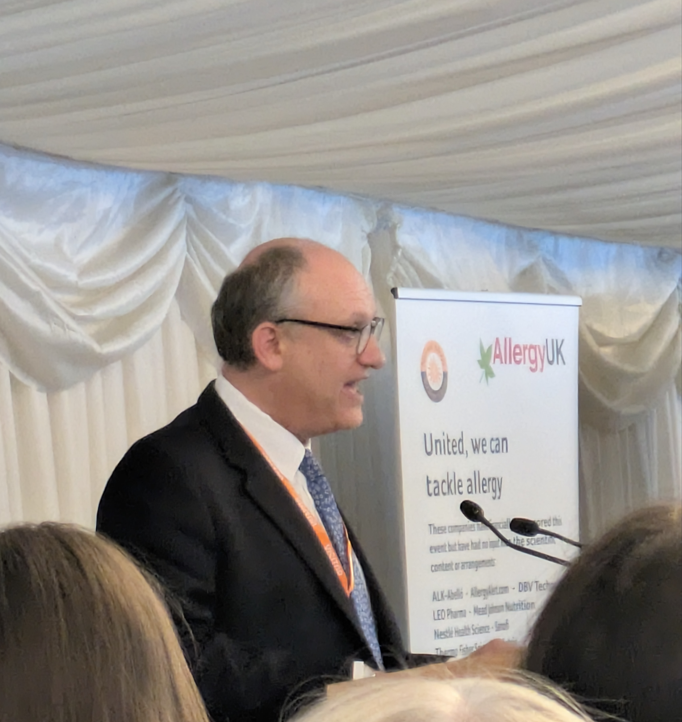
Looking ahead, the NASG believes that co-development and implementation of the Strategy is the most effective way to address the burden of allergic disease. “Since progress will require action across multiple policy areas, alignment with existing priorities across all four UK nations will be critical”, says Professor Fox. He adds, “We anticipate a review phase in which government departments can assess the Strategy’s recommendations and explore areas of alignment with political priorities. The NASG welcomes the opportunity to work with government to support cross-departmental coordination and to contribute to UK-wide discussions on a shared Allergy Framework.”
“The launch of the National Allergy Strategy signifies a positive milestone for a joined-up approach that presents a once in a generation opportunity to improve allergy care across the UK and eradicate health inequalities” said Georgina Jones, Interim Chief Executive Officer, Anaphylaxis UK.
The Strategy can be read in full at www.nasguk.org.
End
Editors’ notes
Allergy UK’s parliamentary reception in Westminster was made possible with support from Allergy UK’s sponsors: https://www.allergyuk.org/nasg-sponsors/. These companies have financially sponsored this event but have had no input into the scientific content or arrangements.
Formed in 2003, the NASG has advocated for over two decades to ensure the NHS can identify and treat allergy using evidence-based, up-to-date treatments across the whole of the UK. The group includes the British Society for Allergy & Clinical Immunology and the three major allergy charities: Allergy UK, Anaphylaxis UK and The Natasha Allergy Research Foundation.
The National Allergy Strategy was developed by over 150 experts across nine working groups covering political advocacy, patient pathways, workforce education, school safety, food safety, air quality, prevention, data and research and public awareness. Nearly 1,000 responses were received during the public consultation process.
For further information please contact: Satellite Health : 01603 978030 pauline@satellite-health.com or alicia@satellite-health.com