
Benedict’s Law:
New Allergy Training Requirements 2026 for Schools
Make sure your staff are compliant, confident, and prepared to protect pupils at risk of anaphylaxis.

Is Your School Fully Prepared?
In February 2026, the Government formally passed Benedict’s Law, committing to introduce mandatory, statutory allergy guidance for schools in England through the Department for Education.
Schools are now expected to take clear, demonstrable action to improve allergy awareness, prevention, and emergency response. This represents a major step toward consistent, life-saving protections in every school, not optional best practice but expected compliance for all schools in England.
The new statutory guidance is being consulted on and published in summer 2026 ahead of wider implementation in September, bringing schools closer than ever to formalising the core aims of Benedict’s Law.
We recommend bookmarking and sharing this page with your colleagues as it has everything you need to prepare for the new law. We’ll keep it updated with the latest information, so check back regularly. Last updated on 25/09/2026
What the New Law Means for Schools
From September 2026, schools are expected to implement and maintain these requirements annually across all maintained and academy schools in England:
1. Whole-School Allergy Policy
Develop and publish whole-school allergy policies. Note – allergy policy is not medical conditions policy, and it will need to be displayed on the school website.
2. Staff Training
Ensure comprehensive allergy awareness and emergency response training for all staff (including caretakers, mini-bus drivers, lunchtime supervisors, etc).
3. Emergency Medication
Hold spare in-date adrenaline devices (AAIs) on site. Note – they are not a second set of devices prescribed for an individual child, they can be used on any child or adult experiencing anaphylaxis.
4. Individual Care Plans
Implement individual healthcare and action plans for pupils with serious allergies (including food, animal and venom allergies).
Statutory Guidance
Updated statutory guidance Allergy Safety in Schools July 2026 has been published. We have created a model policy that school can use to support the development of their own policy. This matches the requirements of the statutory guidance. We have also created an Individual Healthcare Plan that can be used for the school’s development of these along with a worked example of what a finished one would look like.

Read our FAQs
Jump to FAQs
How Anaphylaxis UK Can Help Your School
Anaphylaxis UK are here to support schools, guiding them through the legislation confidently
1. Training for schools

Our trusted, charity-led allergy training for schools is specifically designed to help you meet the new statutory expectations confidently and efficiently. It ensures everyone understands their role in keeping pupils safe.
3. Allergy lead training
 Webinar for the new allergy lead helps to guide them through the requirements of the role. Discover what actions are needed to achieve compliance and have space to create the action plan with an expert on hand to support.
4. Nominated governor training
 Webinar for nominated governors help to understand the role and how it fits into the wider safeguarding duty with links into SEND and curriculum management.
7. Downloadable resources

8. Suppliers of adrenaline kits for schools

We’ve compiled a list of trusted suppliers offering adrenaline auto-injector kits and related emergency allergy products.
Licenced Trainers
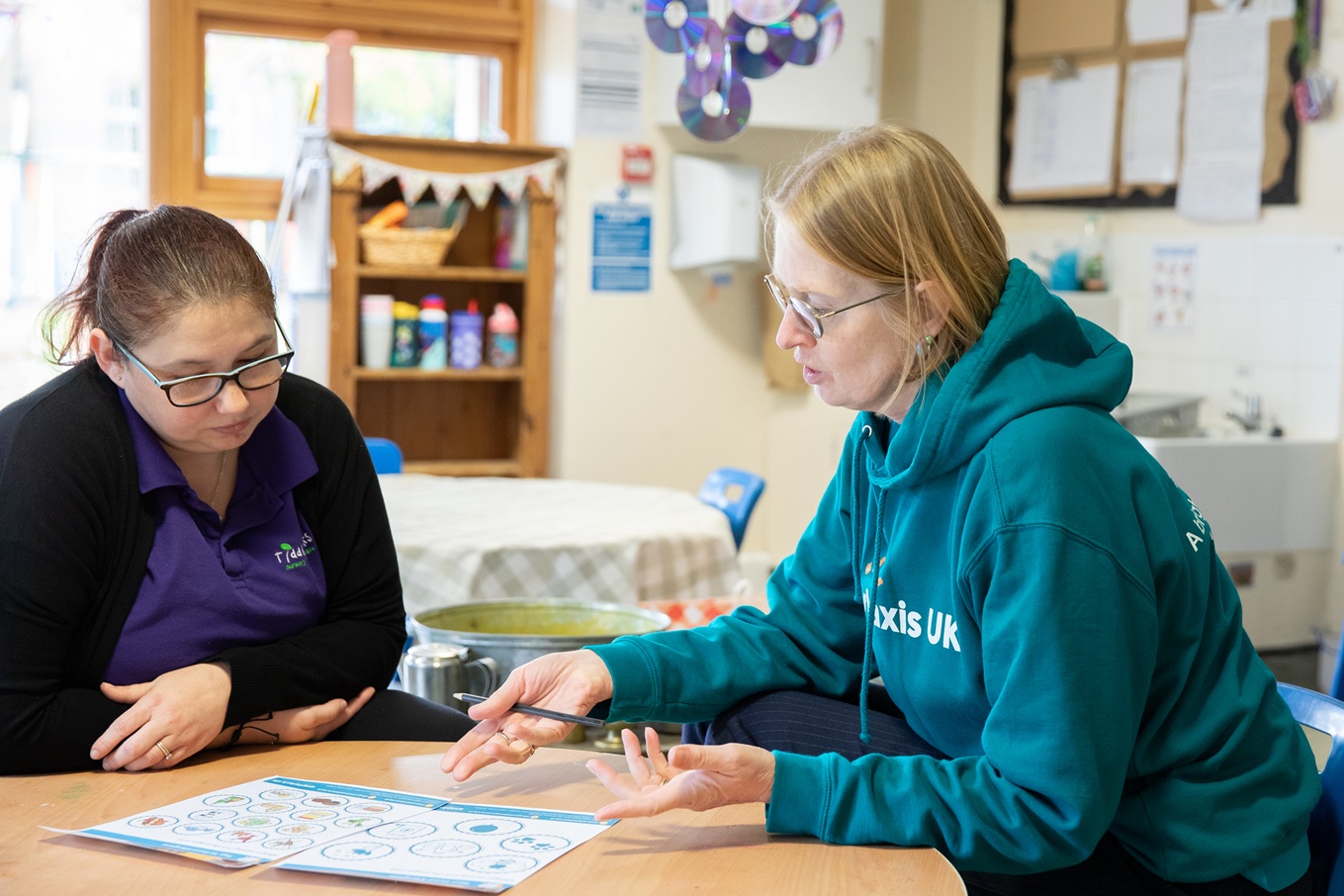
These trainers have undergone training through Anaphylaxis UK. They are licenced to deliver our courses and undergo quality assurance. At the moment, we are not accepting any further licenced trainers.

What Your Staff Will Learn
By completing AllergyWise® for Schools training, that is compliant with the requirements in the new statutory guidance, staff will be able to:
- Recognise early signs of allergic reactions.
- Identify the symptoms of anaphylaxis.
- Respond quickly and appropriately in an emergency.
- Administer adrenaline devices confidently (incl. recently introduced EURneffy® nasal adrenaline spray).
- Reduce risk through practical allergen avoidance strategies.
- Understand their professional responsibilities under current legislation.
Meet Your Expert Trainers
 Our courses are led by Tracey Dunn, Education and AllergyWise® Manager, a highly experienced and respected leader in primary education. Tracey has been part of Anaphylaxis UK since 2024, bringing with her more than 30 years of teaching experience and over 15 years as a Primary Head and Executive HeadTeacher.
Throughout her career, Tracey has worked in a wide range of primary schools, from small community settings to large multi-form schools. This breadth of experience gives her a deep understanding of the challenges faced by teachers and leaders, enabling her to offer practical, real-world guidance that supports educators at every level.
On a personal note, Tracey is a mum to two allergic teens: one with food allergies and AAIs, the other with grass and pollen allergies currently going through immunotherapy. This personal experience brings an additional depth of understanding to her work supporting schools.
Beyond her work in schools, Tracey represents Anaphylaxis UK in discussions with the Department for Education, contributing her expertise to help shape policies and guidance designed to make schools safer for pupils with serious allergies. Her ability to bridge educational experience with national-level conversations places her among the most knowledgeable and influential voices in the field.
Why Schools Trust Our Charity
At Anaphylaxis UK, we understand the real-world pressures schools face, and we make compliance straightforward.
- Specialist focus on allergy safety
- Over 15 years of supporting schools and families
- Medically reviewed, evidence-based guidance
- Practical and accessible for all staff roles
- Every course booking supports our wider work with families and schools
- We recognise and reward schools that demonstrate outstanding commitment to allergy awareness through our AllergyWise® School Award.

What Other Schools Say
“Best anaphylaxis training we have had. Tracey answered all our questions providing useful information previously uncovered. I feel much better informed on the signs of allergic reaction in young children and the sequence of steps to take.”
Christchurch Primary School, April 2025
“The training has not only provided crucial knowledge for our team but also started some very interesting and important dialogues around the care for our children with allergies.”
Holly Lodge Primary Academy, January 2025
“So informative and all questions discussed and thoroughly answered. I feel so much more confident in my own understanding of allergies and how to deal with anaphylaxis”.
Saint Patrick’s Catholic Primary School, February 2026
“I feel far more confident now on recognising symptoms and using the appropriate medication.”
Churchfields the village school, December 2025
Pricing & Packages
Flexible training options for schools of every size. We also offer live online training webinars for school staff, available upon request. All of these trainings are compliant with Benedict’s Law and the new requirements of supporting children and young people with medical conditions and allergy.
School Online Training Package
Our Most Popular Training Option – £105 (incl. VAT)
Perfect for small to medium-sized schools looking for a flexible and cost-effective way to train staff.
- ✔ Access for up to 10 staff members
- ✔ 12 months access to the course
- ✔ 1 hour training with final assessment
- ✔ Learn at your own pace
- ✔ CPD certification for all participants
- ✔ Teaching recourses provided upon completion
- ✔ Compliance records for audit
School Face to Face Training
Ideal for training whole staff teams at once with assembly-style workshops for students.
- ✔ Face to Face training for up to 50 school staff members
- ✔ Delivered by experienced trainers with enhanced DBS certificates, many of whom were headteachers previously
- ✔ Practice on how to use adrenaline auto-injectors in emergency
- ✔ Can be completed on either inset day or normal school hours
- ✔ Certificates and a handout provided
- ✔ Optional student assembly workshops
Complete the form to receive a bespoke quote tailored to your school’s requirements and available dates.
Additional discounts

Bulk Discounts
Discounted rates are available for organisations enrolling 50 or more participants. Ideal for large schools, multi-site settings, or trust-wide rollouts.
Returning Schools – 10% Off
If your school or setting purchases AllergyWise® training annually, you’re eligible for an exclusive 10% returning customer discount. Contact us for your discount code.
Multi-Academy Trusts & Local Authorities
We offer bespoke pricing for MATs and LAs looking to train multiple schools at scale.
Why Book Now?
Don’t wait – ensure your school is fully compliant and confident by September 2026 in responding to allergy emergencies.
- Meet the new statutory allergy guidance under Benedict’s Law
- Protect your pupils and staff from potentially life-threatening reactions
- Avoid compliance gaps before inspections or audits
- Support your whole-school safeguarding strategy
Secure your place today!

FAQ About Benedict's Law
-
Is the annual training recommended or mandatory for schools?
From September 2026, all staff annual training will become mandatory.
-
How many staff members are required to be trained?
It is now expected that all staff should have a basic awareness of allergies and know how to recognize the signs of anaphylaxis. This is because a reaction can happen anywhere (in the playground, the dining hall, or a corridor), where a “designated” first aider might not be immediately present.
-
Does the law apply to early years and independent schools?
Independent schools are covered by Benedict’s Law. Maintained nurseries (those attached to the school) are covered by the law too but PVI nurseries are not.
-
Are your trainings compliant with Benedict’s Law and the statutory guidance?
The schools training has been fully updated to ensure that it is compliant.
The early years training is compliant with the Early Years Foundation Stage framework and the Safer Eating section.
-
Is online training enough for being compliant to the law?
Online training that includes the administration of adrenaline is compliant. There are no stipulates that the training needs to be delivered face to face. The crucial factor is that staff must have a go with a trainer device as they complete the online training as this provides the confidence to staff in knowing how it works should an emergency arise.
-
How do I book face to face training?
To book our face to face training, contact us via this form or email us at allergywise@anaphylaxis.org.uk. In order to provide a quote we need to know how many staff and where in the country the school or setting is located. We can also provide face to face training for early years settings. We aim to keep costs as low as possible, travel expenses need to be covered in addition to the training fee.
We have to limited our sessions to 50 people at one time because of the practical element of using the adrenaline devices and being able to ensure that everyone is using them correctly. We are able to run concurrent sessions throughout the day or sometimes bring two trainers for simultaneous sessions.
We have trainers located in South Wales, Midlands, Bedfordshire, Cornwall, South, South West, London and some parts of the South East.
We have limited availability for face to face training in September with most of our trainers fully booked. We are able to lead training during a normal working day. This often proves to be a popular model as schools release support staff during the day and teaching staff after school in order to fit with working hours and reduce overtime costs for support staff. During a normal working day, there is the bonus of us being able to lead assembly style workshops for the students at no additional cost when they happen on the same day as the training.
We offer training for early years settings in the evening as we know that it is difficult to release staff during the normal working day.
-
Where can school purchase adrenaline auto-injectors from?
It is not essential to have a complete package or to spend a huge amount of money on them. Adrenaline auto-injectors can be purchased from a high street or online pharmacy, using our template letter from our downloads section on the school’s headed paper, signed by the headteacher. It’s worth asking high street pharmacies for their best price and whether the school may be eligible for the NHS price.
You can also check our List of suppliers of adrenaline kits for schools.
-
How much do they cost?
Packages vary by supplier and they come with different elements included. Some are a simple case with the adrenaline auto-injectors, whilst others include training. Purchased directly from the pharmacy will be the cheapest option and the prices vary too as the pharmacy adds on an administration charge to the cost price. It is always worth asking for a discount or the NHS price. Some pharmacies (especially the independent ones) are willing to do this. From a pharmacy they typically cost £80-100 per autoinjector.
-
Which AAIs are best for schools – EpiPen or Jext?
Both EpiPen and Jext are equally effective and follow the same clinical guidelines, so neither is considered better for schools. Most schools choose based on which brand their local pharmacy has in stock or which trainer pens they already have available for staff practice.
-
Where should schools store adrenaline auto-injectors?
They should be in a central location that is known to all staff. They need to be stored out of direct sunlight and a place that has a relatively constant temperature that is below 25o and above freezing. They should not be in a first aid bag. We recommend that a consistent colour for allergy is used throughout school.
-
What AAI dosage do I require for the pupils at my school?
Generally, pupils under 30kg (usually KS1) require a 150mcg dose, while those over 30kg (usually KS2 and above) require a 300mcg dose. It is essential to check each student’s individual Allergy Action Plan to ensure the correct strength is administered.
-
How many do I need?
For State-funded nursery school:
AAI for children under age 6 years (150 micrograms), EG EpiPen Junior, Jext 150 – 2
AAI for individuals over 6 years of age (300 microgram), e.g. EpiPen, Jext 300 – n/a
For Primary school:
AAI for children under age 6 years (150 micrograms), EG EpiPen Junior, Jext 150 – 2
AAI for individuals over 6 years of age (300 microgram), e.g. EpiPen, Jext 300 – 2
For Secondary school:
AAI for children under age 6 years (150 micrograms), EG EpiPen Junior, Jext 150 – n/a
AAI for individuals over 6 years of age (300 microgram), e.g. EpiPen, Jext 300 – 2-4
For Special school:
AAI for children under age 6 years (150 micrograms), EG EpiPen Junior, Jext 150 – 2
AAI for individuals over 6 years of age (300 microgram), e.g. EpiPen, Jext 300 – 2
Secondary schools should consider having two pairs of “spare” devices, so that the “spare” ADs are not located more than five minutes aways from where they may be needed.
If the school site is spread out, we recommend undertaking some timed tests to see how quickly the spare adrenaline can be brought to the further point considering the number of access-controlled doors that need to be gone through. Consider too, the adrenaline being fetched by the slowest member of staff rather than the fastest. Plan for worst case. This may indicate that more adrenaline devices are needed than is recommended in the guidance.
-
Can early years settings have adrenaline auto-injectors?
Unless they are a maintained nursery attached to a school, early years settings are unable to hold spare adrenaline auto-injectors. PVIs based on a school site can ask the school whether they would be able to access the school devices in an emergency situation.
In order for early years settings to hold spare adrenaline auto-injectors, the MHRA needs to make further amendments to the regulations. We are often asked what settings can do to help achieve this; we would recommend asking the setting’s local MP to raise this as a parliamentary question. We also suggest settings raise this with their local authority during network meetings as the local authorities can raise it within the department for education.
-
What else do I need to know about adrenaline auto-injectors?
They should always be carried as a pair and must not be split up.
The adrenaline device should be checked regularly by a member of staff with this responsibility to make sure that they are in date and haven’t gone off. The checks should be recorded.
Whilst it is the parent’s responsibility to check their child’s adrenaline devices, it is worth the educational setting also checking these and raising with the parents if there are any problems.
-
Does Benedict’s Law apply to off-site school trips, requiring schools to carry spare AAIs on day and overnight residential trips?
Students going on day trips or overnight residential visits should always take their own adrenaline devices with them. The school needs to risk assess whether it may be appropriate to take spare adrenaline devices in case on emergency with them. The risk assessment will need to consider the location of the trip, is it remote, are there accessible hospital services that could treat anaphylaxis nearby, are there any potential communication difficulties. If the risk assessment shows that spare adrenaline devices are needed on the trip, the school should also make sure that enough devices remain available for students who stay at school.
In Association With
We are proud to partner with organisations who all share the commitment to making educational establishments safer for children and young people.
