HELPLINE: 01252 542029

About Food Allergy

Food allergy occurs when the body's immune system reacts to an ingredient that is harmless for most people, such as peanuts, tree nuts (e.g. almonds, walnuts, cashews, Brazils), sesame, fish, shellfish, dairy products and eggs. The food that causes the response is known as an allergen. Image of a nut

Food allergy is particularly common amongst children.

A UK Government report showed that 1 in 50 children is allergic to peanuts, tree nuts or both.


Glass of milk

Anaphylaxis is an extreme and severe allergic reaction. The whole body is affected, often within minutes of exposure to the allergen but sometimes after hours.

The level of sensitivity to the allergen, and therefore the severity of the reaction varies from person to person. An individual's reaction may vary from one day to the next. Factors influencing severity can include illness, stress, alcohol consumption and exercise. In some cases severe symptoms may be caused by the tiniest trace of the food.


What's the differencence between food allergy and food intolerance?

Food allergies are generated by the immune system and symptoms usually occur within seconds or minutes of eating the food. Tiny amounts can cause potentially life-threatening allergic reactions, which is why knowledge and communication of ingredients and how the food has been prepared is vital.


Food intolerance is not triggered by the immune system and is generally non life-threatening. Intolerance to food can affect the digestion and common symptoms include digestive discomfort, diarrhoea and bloating.

Coeliac disease is not an allergy or a simple food intolerance, it is an autoimmune disease which is triggered by eating gluten from the cereals wheat, rye and barley. Some coeliacs are also sensitive to oats. It is genetic and life-long although it can be diagnosed at any age.

For further information visit www.coeliac.org.uk.

image of wheat sheaf


The information provided here is focused on food allergy.


What people are allergic to?

In the UK, the most common food allergies are to peanuts and tree nuts (such as walnuts, brazils and almonds). Some people can react to egg, fish, milk, sesame, shellfish, soya and a range of other foods including fruits. In the UK, kiwi fruit allergy among children is becoming more common.

Many other foods cause problems for a small number of people. Any person who says that that they have a food allergy - whatever the cause - needs to be taken seriously. Those with food allergies need to know the ingredients in everything they eat as even the tiniest amounts could cause severe reactions.

Major food allergens are now required by law to appear on labels of packaged food, even when present in tiny quantities.

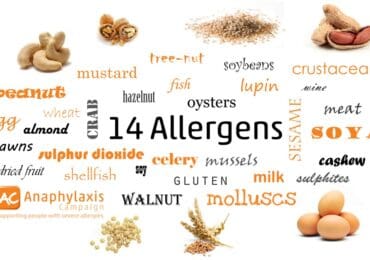
A list of Allergens that must be labelled on packaged food under EU Law


Did you know?


Hidden/unrecognised allergens

Most people who die from food allergy have actually eaten an allergenic food that was present as an intended ingredient, they didn't know that the ingredient was present and neither, in some cases, did the waiting staff.

For example:

  • a curry from a takeaway with hidden peanut flour in the sauce

  • a sandwich containing Coronation Chicken mix which can contain peanuts or other nuts

  • an apple pie containing very low levels of milk protein added deliberately by the manufacturer


An allergic reaction - what happens?


Donate

In Memory of
Peter Battley